
Toy Trend Ai: From Prompt to Purpose
Like most trends, this one started playfully.
People were generating action-figure versions of themselves, some purely for fun, others leaning into nostalgia or humor. A few artists illustrated their figures by hand instead of using AI. The outputs varied, but what caught my attention wasn’t the final image, it was the intent behind it.
Each time another figure appeared in my feed, I found myself studying the details. The accessories. The tools. The subtle choices people made to represent themselves. Cameras. Coffee mugs. Pet companions. Laptops. Each element felt deliberate. Was it leaning in towards portraying their personal or professional life, perhaps a business?
It made me pause and ask a simple question:
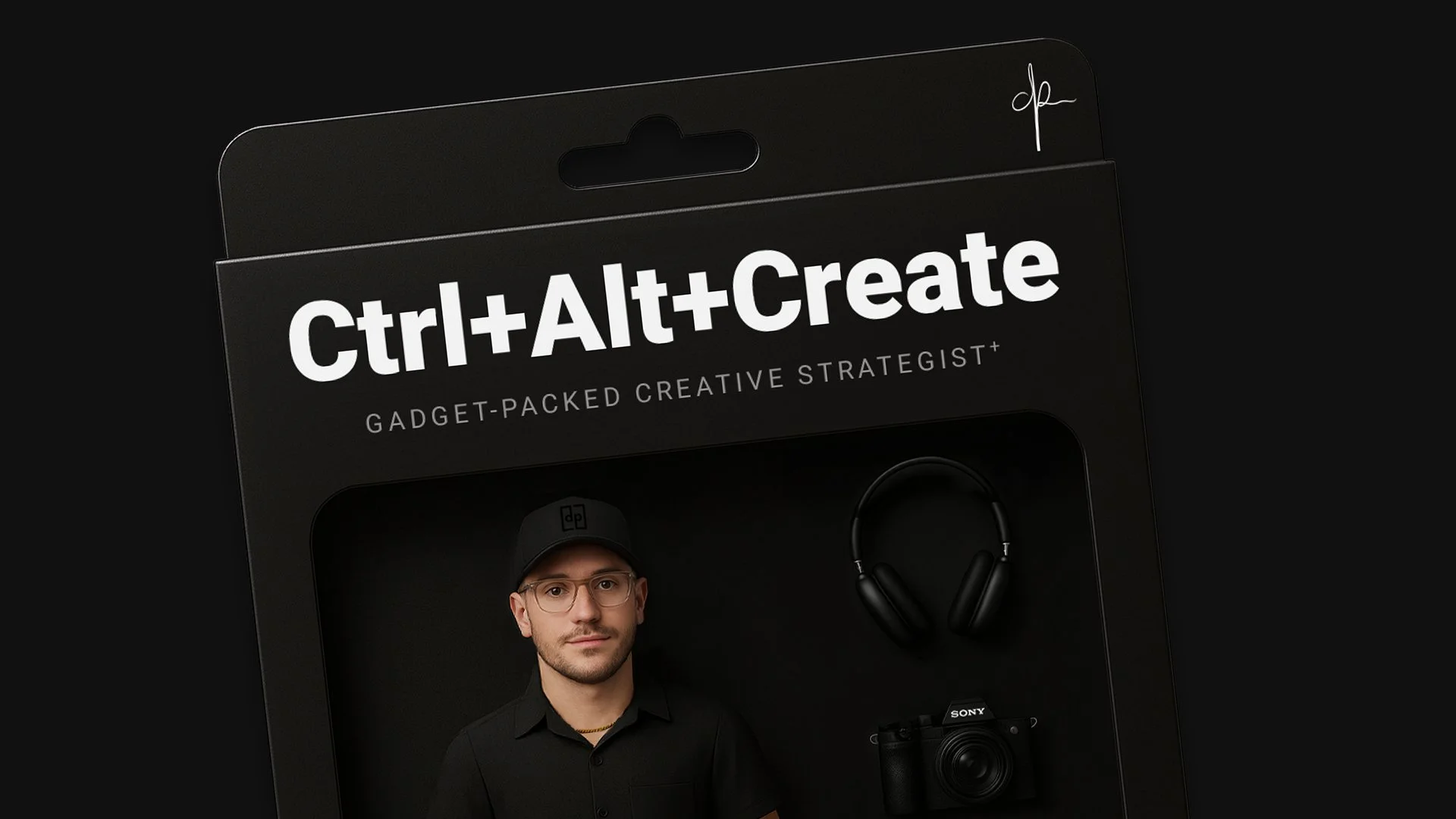
If I were a figure, how would I be marketed?
USING AI WITHOUT LETTING IT DECIDE
AI played a role in the process, but it wasn’t the author.
I used ChatGPT and image generation as exploratory tools, continuously adjusting prompts to move closer to what I had in mind, often improving one detail while unintentionally introducing inconsistencies elsewhere. After many iterations and multiple versions, it became clear that AI could get close but couldn’t fully articulate the vision.
So I took control back.
Rather than relying on a single output, I curated elements from multiple generated versions and refined them manually:
Selected the strongest details and accessories from different outputs
Combined, resized, and manipulated elements in Photoshop to create a cohesive, intentional layout
Corrected scale, spacing, and alignment so nothing felt accidental or “generated”
Applied branding through typography, hierarchy, and accurate logos to ground the concept in reality
Designed a back panel to extend the story, adding context, personality, and depth beyond the front-facing visual
Enhanced realism so the piece felt closer to a finished product, not a quickly generated image
AI helped accelerate exploration, but human judgment shaped the outcome.
DESIGNING A VISUAL RÉSUMÉ
Stripped down, the toy trend isn’t about toys at all; it’s about representation.
When I thought through my own figure, I wanted it to act like a visual résumé. Not exaggerated or novelty-driven, but intentional. The accessories, stance, and tools weren’t decorative; they reflected how I actually work and who I am as a creative.
The result was an action-figure-styled creative strategist: equal parts designer, explorer, and builder. Fueled by caffeine, grounded in movement, and surrounded by the tech and gear that support my process. In a single frame, it became a concise snapshot of my creative identity, without needing explanation.
FROM TREND TO TANGIBLE CONCEPT
Even the most descriptive prompt wouldn’t produce exactly what I envisioned.
What started as a trend became a finished concept because design decisions took over, structure, storytelling, and consistency. The things AI can assist with, but not own.
That’s why I don’t see AI as something to boycott. It’s a tool. One that responds to direction, taste, and intent. Used passively, it creates disposable results. Used thoughtfully, it becomes part of the process.
In this case, it helped transform a fleeting trend into something more lasting.
And yes, if this were a real product... I’d order one.
This trend saw thousands of personalized AI-generated toy images shared across LinkedIn, Instagram, TikTok, and X. For me, it wasn’t about keeping up; it was about slowing down long enough to shape it. Starting with a generated foundation and applying intention, craft, and judgment turned the idea into something personal and complete.
Trends fade.
Tools evolve.
Clarity and intention last.